Book soon Openers · Collingwood
Garage Door Opener Diagnosis and Repair
Nothing. No light, no click, no hum from the unit on the ceiling.
Call now · open 24/7(249) 499-8812Right now
Before the door is looked at
Call (249) 499-8812, open 24/7.
Pull the release with the door fully closed whenever possible, and keep the opening clear as you do. Once the trolley lets go, the door is held by its springs alone, and a closed door can still shift unexpectedly.
Never drive a vehicle at a closed door to get out; the door collapses and the stored tension in the counterbalance is released. Use the release, the outside key release, or a technician.
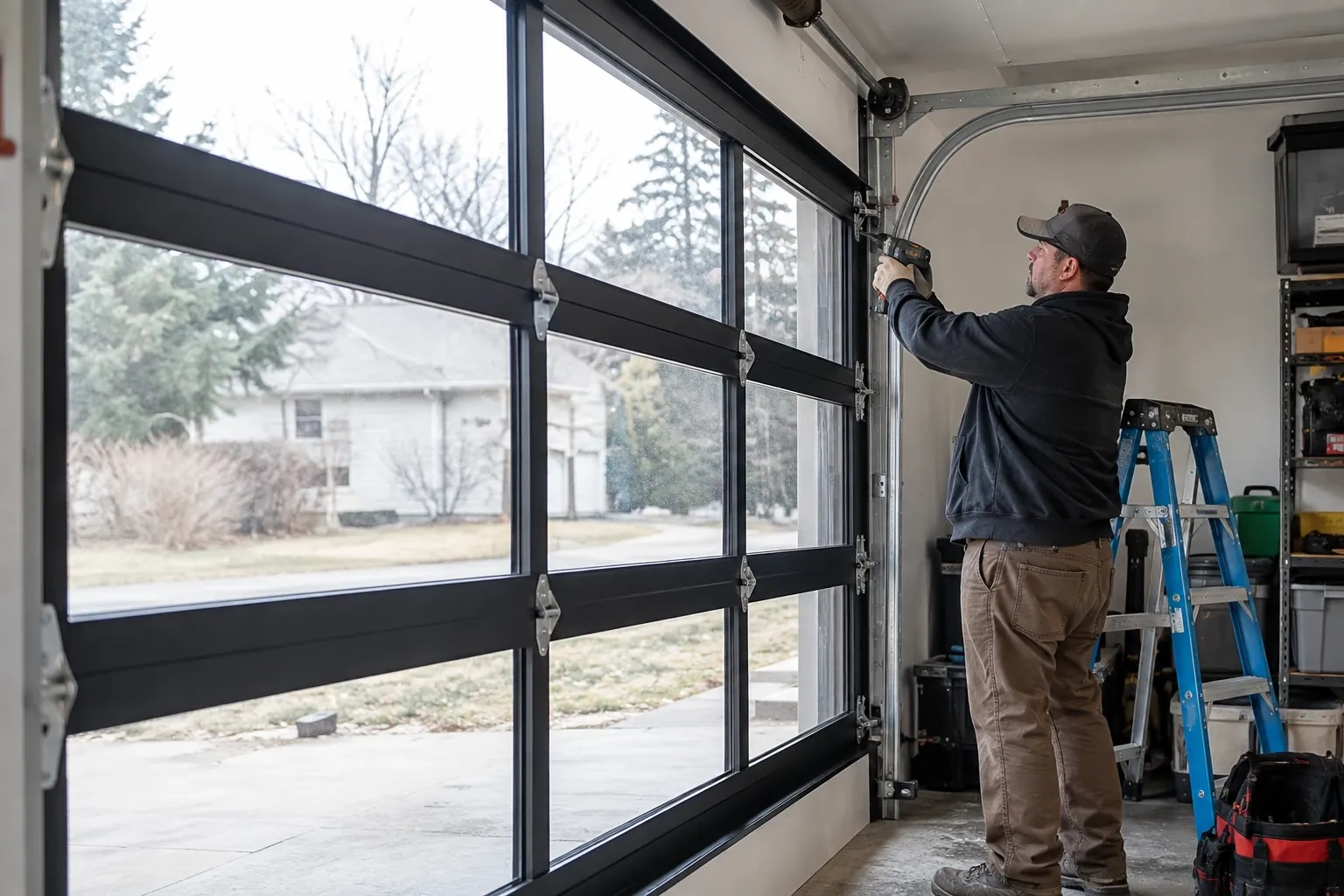
In freezing weather, check that the bottom seal has released from the slab before using the opener; a door frozen to the floor is the most common winter route to slack cables and a crooked door.
In plain words
Think of a command travelling through the system. Your thumb presses a button; the radio signal reaches the receiver; the logic board decides to move; the motor turns; a gear drives a chain, belt or screw; the trolley pulls the arm; the arm moves the door. A fault at any link produces the same result from where you stand: nothing happens. Diagnosis walks that chain in order and finds the broken link, whether it is a flat remote battery at the start or a stripped gear in the middle. Working from one end keeps the fix small and the explanation simple.
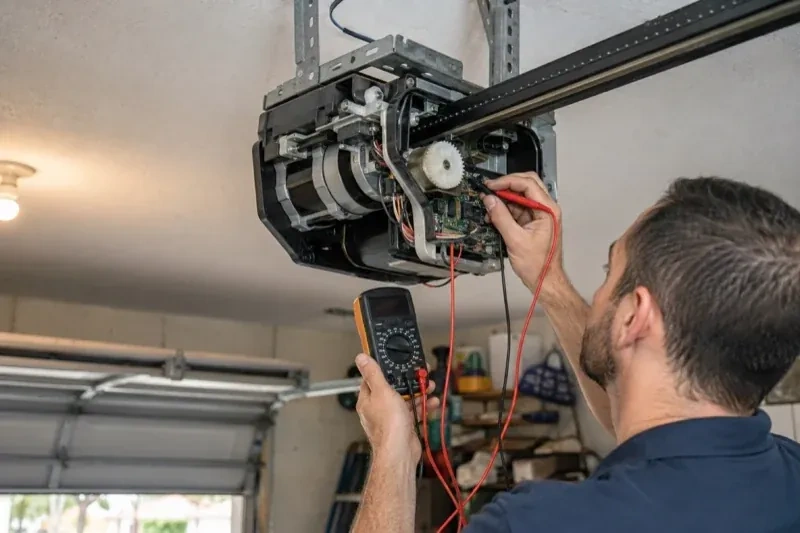
How the visit goesFor a few days there was a grinding sound whenever the door started moving. Now the motor spins freely and the door stays exactly where it is. On the hood of the car there is a scatter of white plastic shavings that fell from the unit above.
Garage Door Opener Diagnosis and Repair · Collingwood
How the visit goes
- 1
The story before the tools
Diagnosis begins with what you saw and heard. When did the door last behave, and what changed between then and now: a power outage, a storm, a new light bulb, a shovel leaning against the sensor, someone pulling the red cord? Does the motor hum, click, run or stay silent? Does the fault follow one control or all of them? Is the door stranded up or stranded down, and does it move at all by hand? A few minutes of this on the phone or at the door points the technician at one part of the system instead of all of it, and often shortens the visit considerably.
- 2
Restoring power the right way
When the fault is electrical supply, the fix is matched to the cause rather than simply reset. A tripped breaker or ground-fault device is reset and then watched through several cycles to be sure it holds; one that trips again points to a damaged cord, a wet outlet or a failing motor. A blown board fuse or a dead transformer is replaced with the part specified for the model. Surge damage after lightning often shows as a board that lights up but ignores every control, and that board is replaced where the model is still supported. New receptacles or hard wiring are referred to an electrical contractor.
- 3
The monthly test you can do yourself
You leave knowing a short check that catches most opener trouble early. Once a month, with the door open, lay a piece of 2x4 flat on the floor under the middle of the door and press close; the door should touch it and go straight back up. Then close the door again and pass a broom handle through the sensor beam near the floor; the door should stop and reverse. Watch the sensor lights stay steady. If either test fails, stop using the opener and book a visit. These are the same tests the technician just performed, and they are all the standard asks of a working unit.
In the van
- Travel limit switch or RPM sensor
- Garage door lubricant
- Trolley and carriage
- Chain or belt
- Wall control
What affects the quote
- 1
Wiring to be re-run
Damaged low-voltage wire to the sensors or the wall control is replaced along its whole length and clipped clear of the track, so the distance and route from head unit to door frame affect the time.
- 2
Remotes and keypads
Each remote or keypad to be reprogrammed, re-batteried or replaced is counted individually. Say how many devices you have so the quote reflects all of them.
- 3
Ceiling height and access
A standard-height garage puts the head unit in easy ladder reach. High ceilings, high-lift tracks, storage lofts or a car that cannot be moved add setup time and sometimes a taller ladder.
Same fees day, night or weekend.
Garage Door Opener Diagnosis and Repair: questions
My remote only works when I am close to the door. Why?
Short range is almost always interference or a weak signal, not a broken opener. Certain LED bulbs, including ones fitted in the opener's own sockets, emit noise on the frequency remotes use. A remote battery near the end of its life also loses reach before it fails outright. The technician tests range with a known-good remote, swaps bulbs, checks the antenna wire hangs free below the head unit, and replaces the battery or remote as needed.
Should I lubricate the chain, the rail or the track?
Rollers, hinges, bearings and springs benefit from a garage door lubricant once or twice a year. The chain, belt or screw-drive rail is a separate question, since each drive type calls for its own product and schedule from the opener's manual rather than one rule for every unit. The track itself should stay clean and dry, because lubricant there collects grit and makes rollers slide instead of turning. The technician can point out the spots on your door at the end of the visit.
What is the red cord for, and is it safe to pull?
It is the emergency release that disconnects the door from the opener so you can move it by hand, for instance during a power outage. It is safe when used with the door closed. Pulling it with the door open is the risk, because an unbalanced door can then drop. Pull straight down, lift the door by its handle, and reconnect afterwards by running the opener or lifting until the trolley clicks back in.
Openers & Access
Bigger photo, sooner job: Emergency Book soon Plan ahead
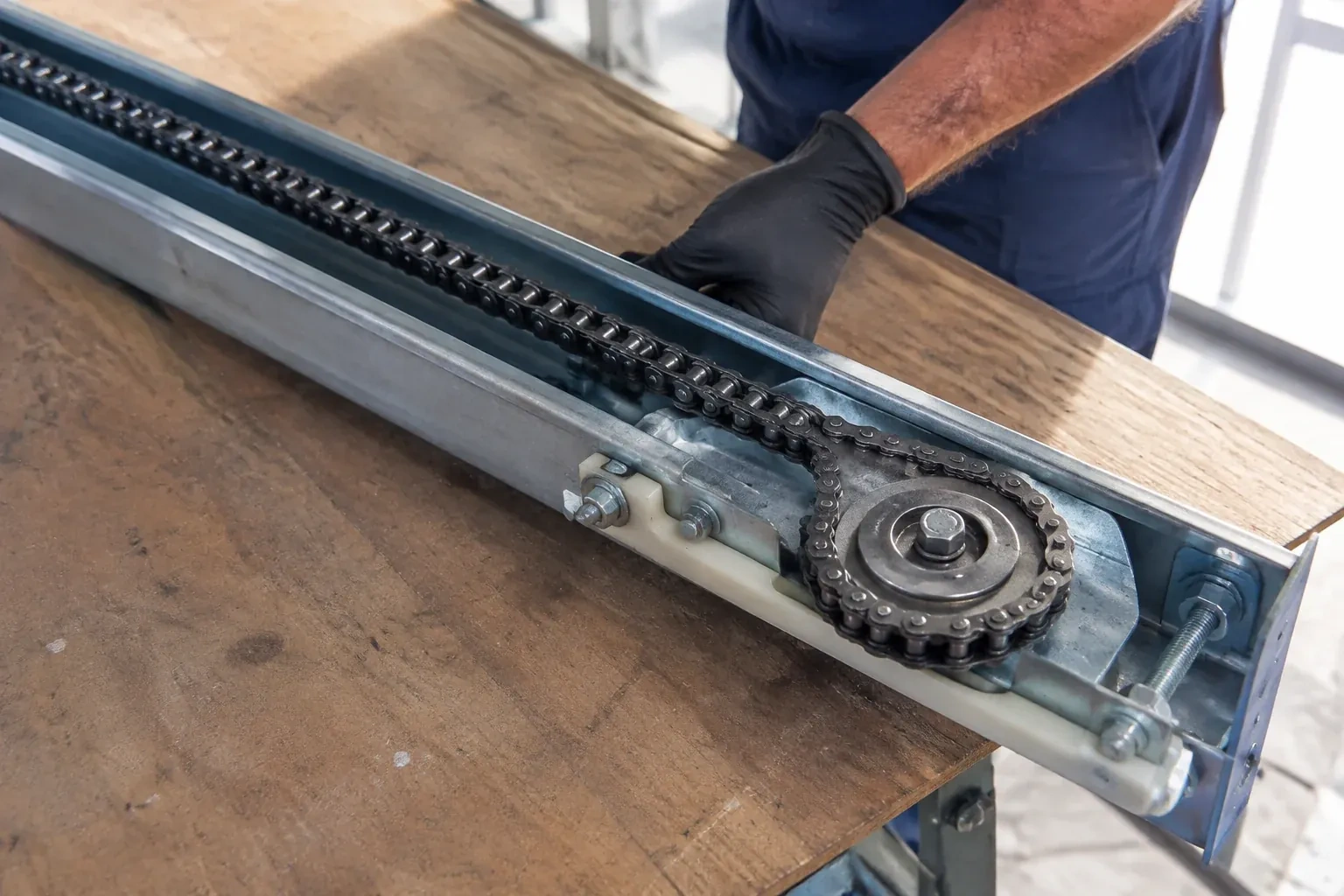 Book soonChain-Drive Opener RepairThe chain hangs in a loop under the rail and slaps against it on every cycle.
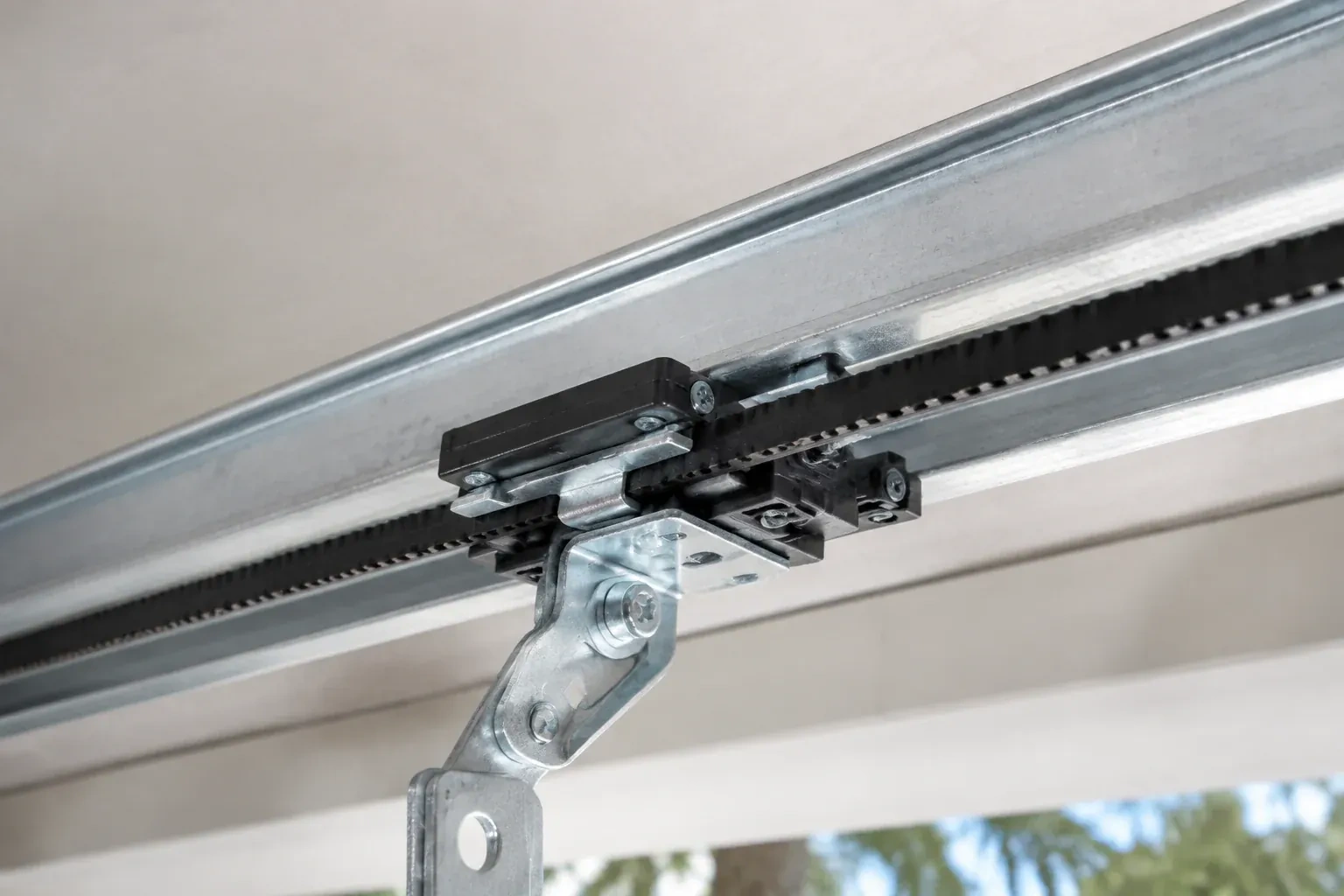 Book soonBelt-Drive Opener RepairIt is minus twenty in the detached garage and the door climbs in jerks, the belt stiff as a board.
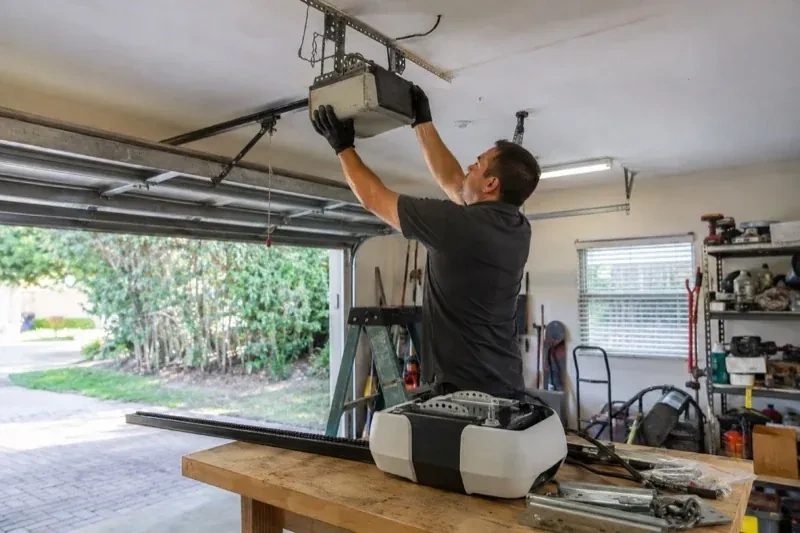 Plan aheadGarage Door Opener Replacement
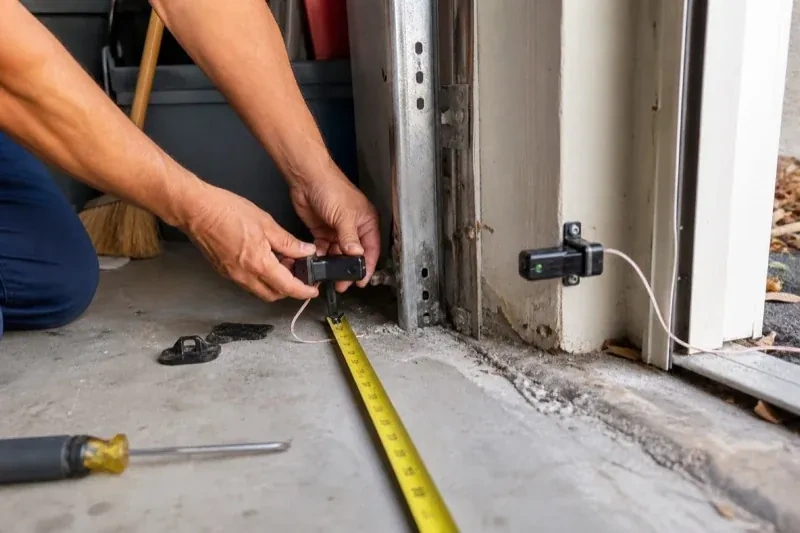 Book soonPhoto-Eye Sensor Alignment or ReplacementYou press the remote, the door drops a few centimetres, then climbs straight back to the top while the opener light blinks.
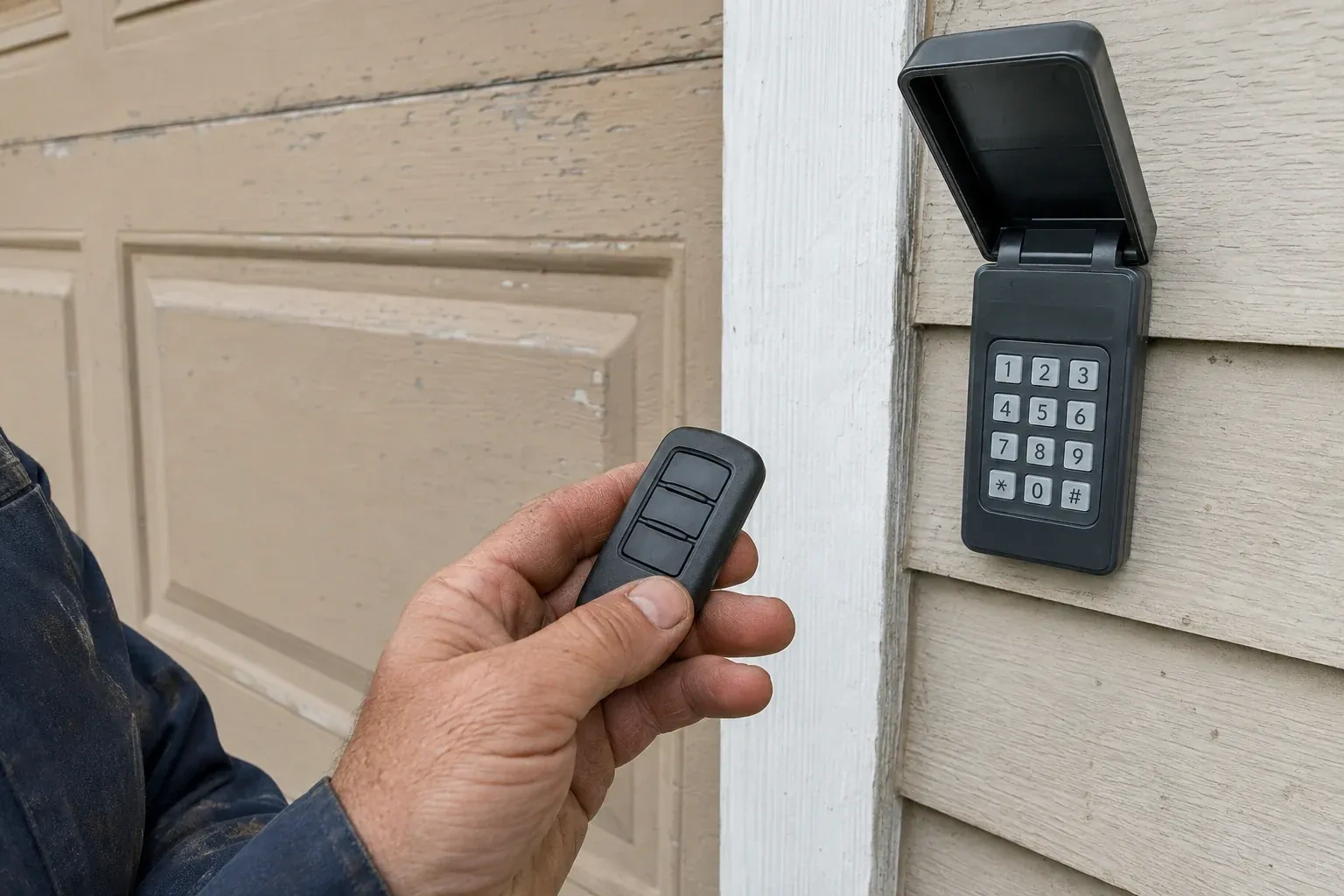 Plan aheadGarage Door Remote and Keypad Programming
Garage Door Opener Diagnosis and Repair near you
Simcoe, Ontario
Collingwood information
- Town
- Collingwood, Simcoe, Ontario
- In business
- 32 years
- Hours
- Open 24/7 · nights, weekends and holidays, same fees
- Phone
- (249) 499-8812
- Visits
- On-site assessment preferred. Request a visit or call.
What the census means at the door
40%
Homes of every age. About 40% of homes in Collingwood were built in 1980 or earlier, according to the 2021 Census.
Where houses span several decades, weatherproofing needs vary: older garages with uneven aprons need thicker bottom seals, newer ones mainly need cracked seal sections replaced. The technician looks at how the door meets the floor and the jambs and fits the seal that actually closes the gap.
56%
A mix of homes. Single-detached houses make up about 56% of homes in Collingwood (2021 Census).
In areas mixing houses with townhouses and condos, a technician often works on several doors on one street, some owned outright and some looked after by management. Scheduling them together saves everyone time, and we are glad to plan a visit that covers the group.
Nearby
Open 24/7
Request a visit
Nothing.
Call now · open 24/7(249) 499-8812- On-site assessment preferred
- Same fees day, night or weekend
- 32 years in business