Emergency Springs · Collingwood
Extension Spring Replacement
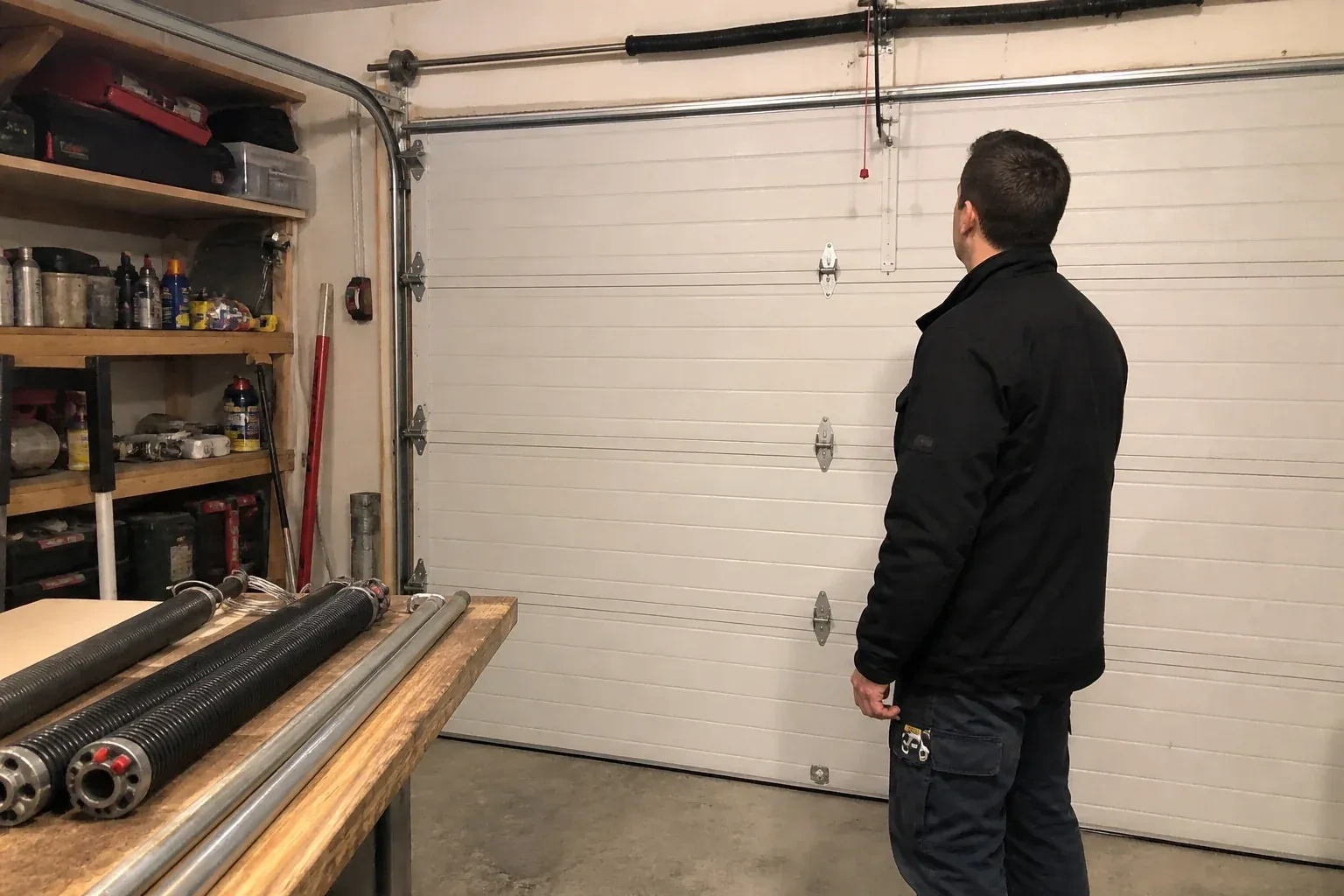
The home inspector's report on the house you are buying flags the garage door: extension springs with no safety cable running through them, coils showing rust, and a door that sank when he lifted it partway. The seller has never had it looked at.
Call now · open 24/7(249) 499-8812Right now
Before the door is looked at
Call (249) 499-8812, open 24/7.
When a spring breaks, the safe approach for the household is to leave the door where it is, keep people and vehicles clear, and avoid running the opener, which can damage the top section, the trolley or the gear drive.
Pull the manual release only when the door is fully closed unless a technician asks otherwise; a door disconnected while partly open can move on its own if the springs are out of balance.
Never drive a vehicle at a closed door to get out; the door collapses and the stored tension in the counterbalance is released. Use the release, the outside key release, or a technician.
In plain words
When one extension spring breaks, the other is replaced with it. The two springs were fitted together, have stretched the same number of times and have rusted in the same air, so the survivor is near the end of its life. More importantly, a door balances only when both sides pull equally; a new spring paired with a tired one lifts one corner ahead of the other and twists the door. Fitting a matched pair rated for the door's weight lets the technician set both sides to the same hook position and hand back a door that rises level and holds where it is left.
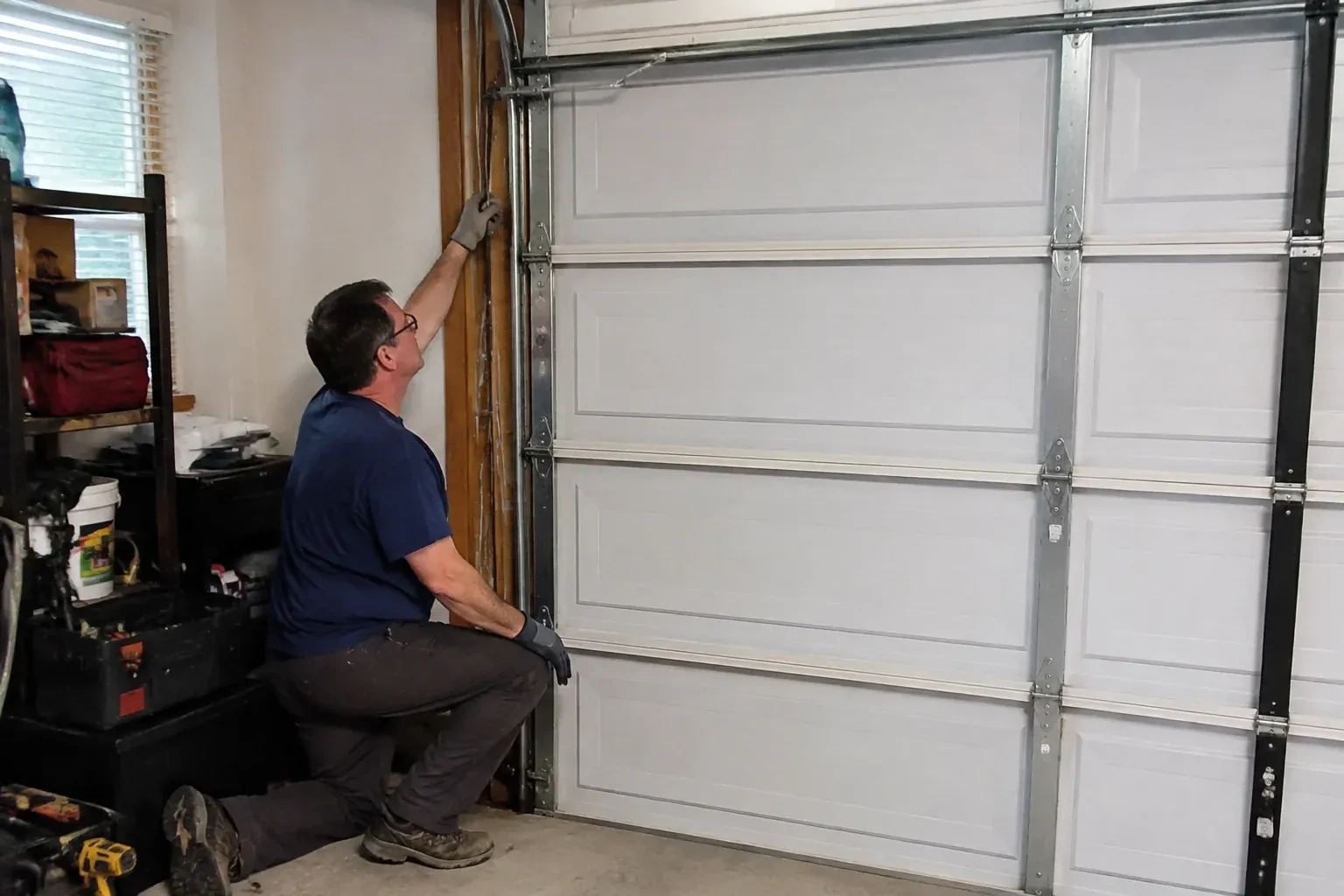
How the visit goesOne of the springs beside the track is hanging loose at the front end, its pulley dangling, and a length of cable lies slack along the top of the door. The door sits slightly crooked and the opener reverses whenever it tries to close.
Extension Spring Replacement · Collingwood
How the visit goes
- 1
Containment cables, present or missing
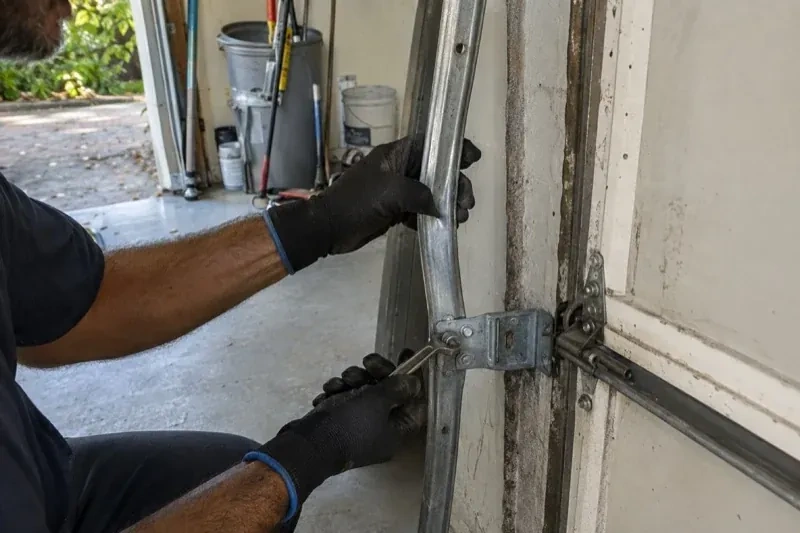
The question the industry's own inspection checklist asks of every extension-spring door is whether each spring has a cable running through its centre, anchored at both ends. The technician checks for it on both sides, then checks its condition: a cable that is frayed, kinked, anchored to a loose screw or simply tied off to the hanger is not doing its job. Doors installed decades ago often have none at all, and doors that had a spring changed by a previous owner sometimes have one side fitted and one forgotten. Fresh containment cables go on with the new springs, and their anchor points are set into solid framing so that a spring which breaks stays on its cable.
- 2
Setting both sides to the same hole
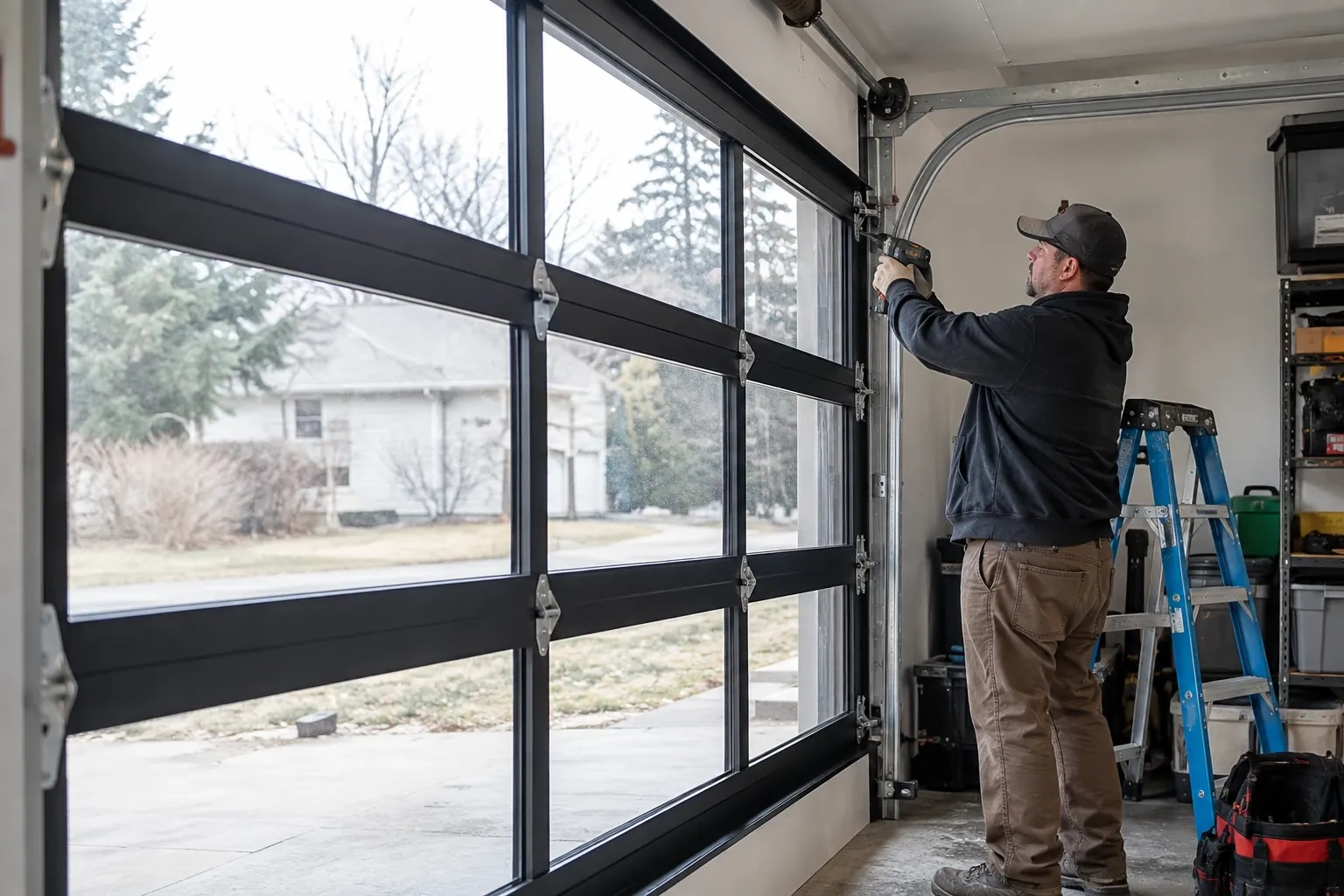
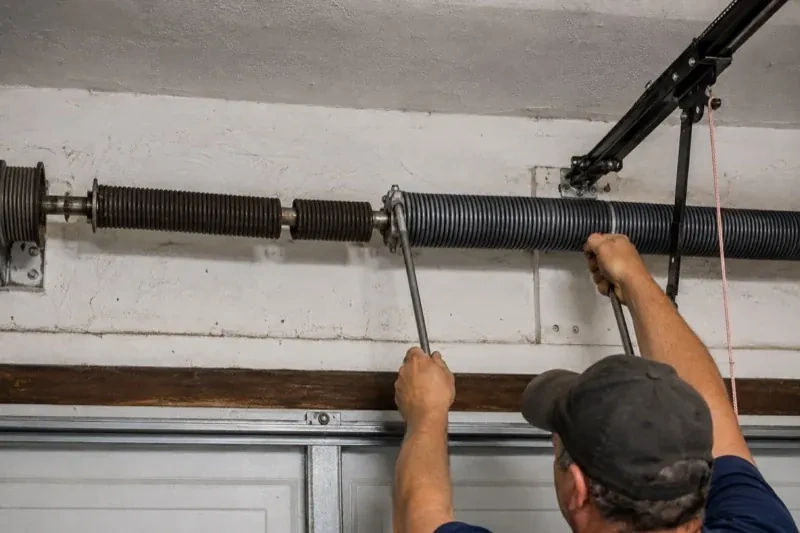
The initial tension is set with the door open and clamped, so the technician is adjusting slack springs rather than loaded ones. Each cable's S-hook is placed in a hole on the hanger, or its clip set to a mark, and the two sides are put at the same position. The cables are drawn to the same snugness so that neither corner of the door is being pulled ahead of the other. A level across the top section confirms the door is square in its tracks. Only when both sides read the same do the clamps come off and the door come down for its first balance check.
- 3
A door that lifts as it was designed to
The difference is felt the first time you pull the release cord and lift the door yourself. It rises with one hand, pauses where you leave it, and comes down at the speed you lower it rather than dropping the last stretch. Under power, the opener runs without the strain in its note that had crept in as the old springs tired, and the door reaches the floor evenly along the seal. Both springs now stretch to the same length as the door closes, both pulleys turn without a squeal, and the cables lie in their grooves. A door in this condition puts little wear on the opener, which is good news for the motor.
In the van
- Garage-door spray lubricant
- Rear spring hangers and angle iron
- Lift cables
- Replacement rollers and hinges
- Pulleys (sheaves) and forks
What affects the quote
- 1
One spring per side or two
Heavier doors sometimes carry a pair of springs on each side rather than one. Four springs, four containment cables and the extra setting time show as their own lines.
- 2
Door weight and size
Spring rating follows the door's weight, and a wide insulated door or a wood door takes heavier springs than a light single. Weight and height together set the parts on the quote.
- 3
Converting to torsion instead
Where the garage has the headroom, some owners take the opportunity to move to a torsion system. That is a different job with different hardware and is quoted as its own option.
Same fees day, night or weekend.
Extension Spring Replacement: questions
Will the lift cables be changed as well?
They are inspected every time and changed when they show fraying, rust at the bottom loop, or a kink from having jumped a pulley. Cables and springs are generally the same age, and with the door already open and the springs off, fitting new cables adds little to the visit. Bright, tight strands with clean loops can stay and are simply re-routed over the pulleys and set to the new springs.
Could I switch to torsion springs instead of replacing the extension ones?
Sometimes, and it is worth asking. A torsion system needs room above the door opening for its shaft and a header that can carry the spring bracket, which many older garages with a low ceiling simply lack; extension springs are there for that reason. Where the headroom exists, a conversion is a separate job with its own hardware and quote. The technician can tell you on the spot which route suits your garage.
How do you know which springs my door needs?
By weight. Extension springs are rated for the weight they lift, so the technician releases the opener and weighs the door on a scale, then matches that figure and the door's height to a spring rating and stretch length. The old springs are measured as a check on wire size, coil diameter and length. Where the two disagree, the scale decides, since doors gain weight from added insulation or panels.
Springs & Hardware
Bigger photo, sooner job: Emergency Book soon Plan ahead
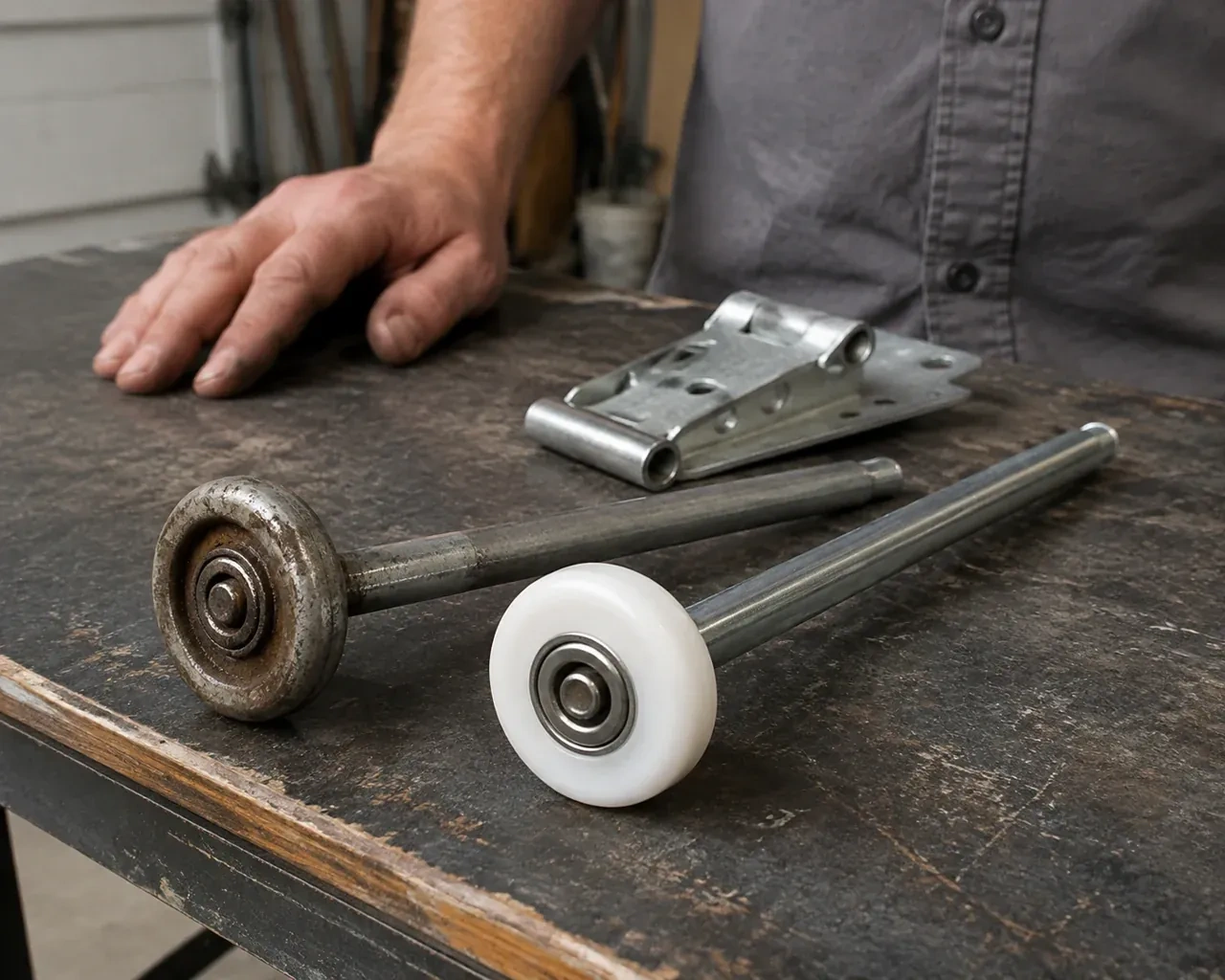 Book soonGarage Door Roller ReplacementSince the cold snap the door has been stiff and noisy first thing, and after the last thaw the bottom corner began to judder.
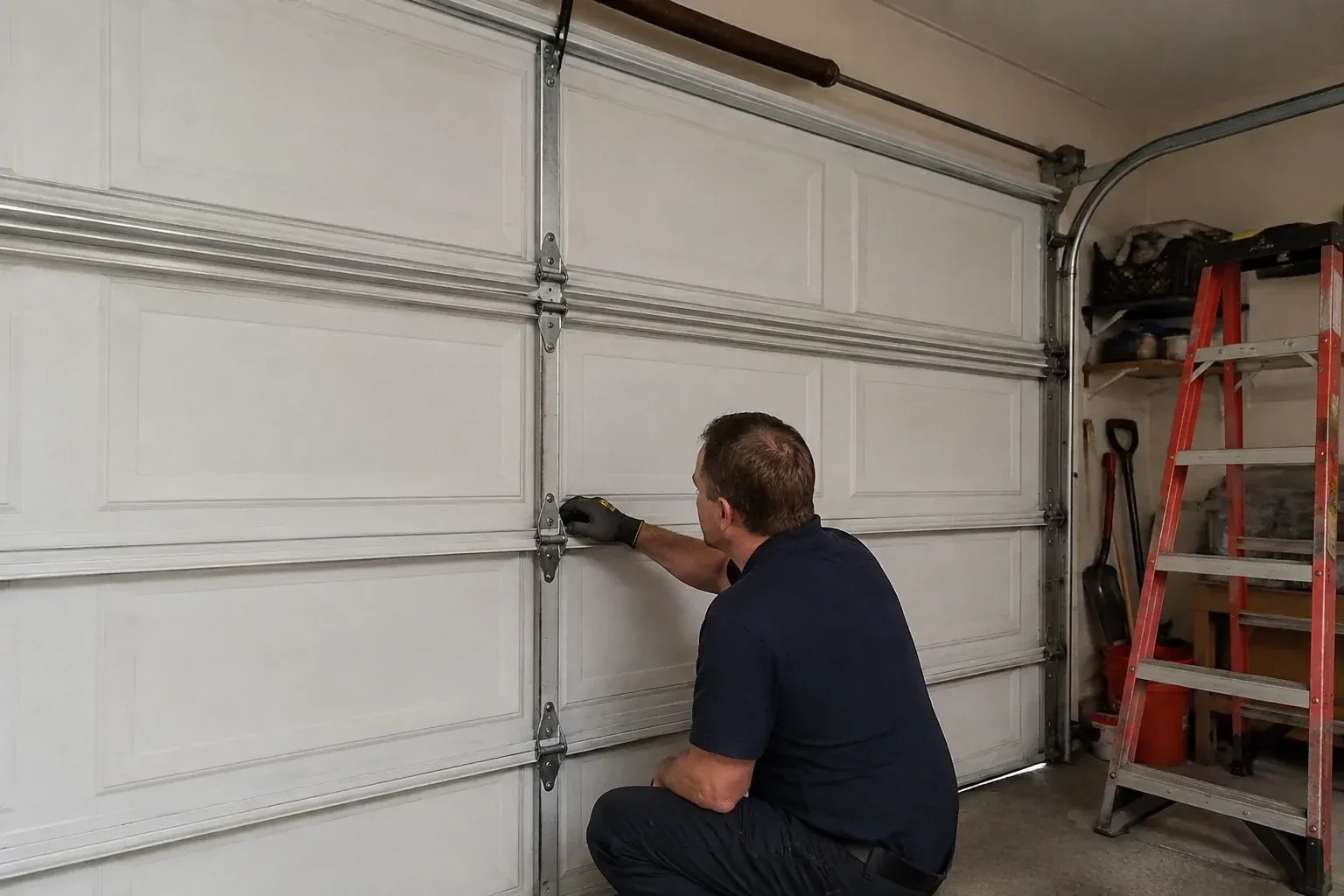 Book soonGarage Door Hinge ReplacementPressing a hand against one of the middle hinges makes it rock on the panel.
 Book soonGarage Door Track Repair or ReplacementYou bought the house with a door that sticks near the top of its travel.
 EmergencyGarage Door Cable ReplacementThe car bumper kissed the door on the way in.
 EmergencyTorsion Spring ReplacementThe door drops the last stretch to the floor rather than settling, and when you stop it halfway by hand it slides down instead of…
Simcoe, Ontario
Collingwood information
- Town
- Collingwood, Simcoe, Ontario
- In business
- 32 years
- Hours
- Open 24/7 · nights, weekends and holidays, same fees
- Phone
- (249) 499-8812
- Visits
- On-site assessment preferred. Request a visit or call.
What the census means at the door
40%
Homes of every age. About 40% of homes in Collingwood were built in 1980 or earlier, according to the 2021 Census.
Where houses span several decades, weatherproofing needs vary: older garages with uneven aprons need thicker bottom seals, newer ones mainly need cracked seal sections replaced. The technician looks at how the door meets the floor and the jambs and fits the seal that actually closes the gap.
56%
A mix of homes. Single-detached houses make up about 56% of homes in Collingwood (2021 Census).
In areas mixing houses with townhouses and condos, a technician often works on several doors on one street, some owned outright and some looked after by management. Scheduling them together saves everyone time, and we are glad to plan a visit that covers the group.
Nearby
Open 24/7
Request a visit
The home inspector's report on the house you are buying flags the garage door: extension springs with no safety cable running through them, coils showing rust, and a door that sank when he lifted it…
Call now · open 24/7(249) 499-8812- On-site assessment preferred
- Same fees day, night or weekend
- 32 years in business