Book soon Openers · Tiny
Garage Door Opener Diagnosis and Repair in Tiny
Nothing. No light, no click, no hum from the unit on the ceiling.
Call now · open 24/7(249) 499-8812Right now
Before the door is looked at
Call (249) 499-8812, open 24/7.
Pull the release with the door fully closed whenever possible, and keep the opening clear as you do. Once the trolley lets go, the door is held by its springs alone, and a closed door can still shift unexpectedly.
Never drive a vehicle at a closed door to get out; the door collapses and the stored tension in the counterbalance is released. Use the release, the outside key release, or a technician.
In freezing weather, check that the bottom seal has released from the slab before using the opener; a door frozen to the floor is the most common winter route to slack cables and a crooked door.
In plain words
Diagnosis answers a question you cannot settle from the driveway: repair or replace? Age matters, because boards and gear kits for a twenty-five-year-old unit may no longer be made. Safety matters, because a unit with no photo eyes is one the industry recommends replacing rather than patching. The nature of the fault matters too: a capacitor or a gear kit is a routine repair, while a burnt-out motor in an old chain-drive head is usually the signal to move on. You leave with the finding, the reasoning and the choice in your hands, not a replacement sold before anyone looked.
How the visit goesThe door stops partway up for no reason, or opens fine and then refuses the next time. Some days the keypad works and some days it does not. The opener is the one that came with the house twenty-odd years ago, and nobody has the manual.
Garage Door Opener Diagnosis and Repair · Tiny
How the visit goes
- 1
From motor to trolley
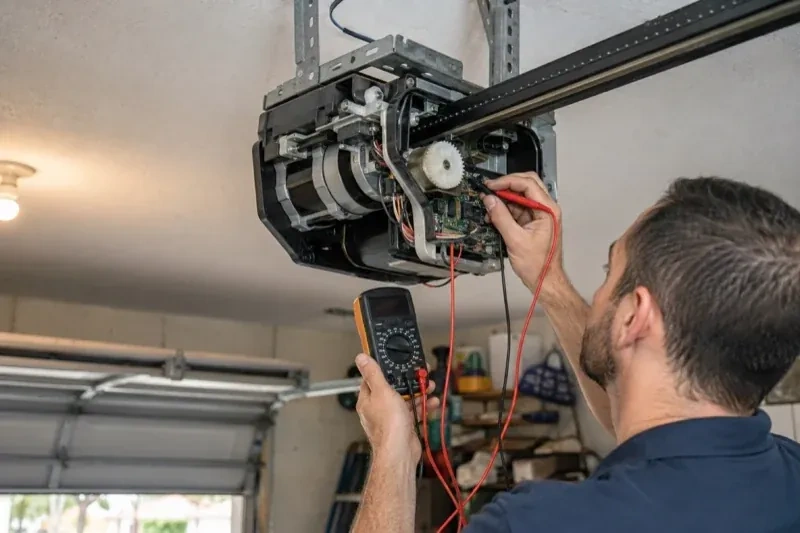
Behind the cover of the head unit and along the rail sits the drive train: motor, capacitor on AC models, drive gear, sprocket, and then the chain, belt or screw that moves the trolley. The technician listens first, because sounds are specific. A hum with no motion suggests a capacitor or a stripped gear; a motor that runs while the trolley slides alone points to a disengaged carriage or a broken drive; a grinding start followed by silence is a worn gear finishing its life. Then the parts are inspected directly: gear teeth, sprocket, chain tension, belt condition, trolley wear, and the coupling between rail and head.
- 2
Re-engaging or rebuilding the drive
A trolley that was disconnected by the release cord is re-engaged: the door is placed by hand, the carriage is run to meet it, and the two latch together with an audible click. A stripped drive gear, the classic failure on chain-drive heads, is replaced as a kit: cover off, motor lifted, worn gear and sprocket out, new gear, sprocket, bushings and grease in, chain re-tensioned so it sags only slightly below the rail. A snapped or badly stretched chain or a frayed belt is replaced and tensioned. Each repair ends with a full open-and-close cycle while the technician watches the trolley for smooth, even travel.
- 3
Care between visits
An opener lasts longer when the door it moves stays easy to move. Twice a year, put a garage door lubricant on the rollers, hinges, bearings and springs; leave the track itself clean and dry so the rollers roll rather than slide. Wipe the sensor lenses and check their brackets have not been knocked. Glance at the chain for slack, and at the bolts holding the rail to the header and the ceiling. Listen for new sounds, since a grinding start or a squeal is the drive asking for attention while the fix is still a small one. None of this touches the springs, which stay a technician's job.
In the van
- Travel limit switch or RPM sensor
- Garage door lubricant
- Trolley and carriage
- Chain or belt
- Wall control
What affects the quote
- 1
Getting in when the door is stuck shut
A garage with no side door and no house connection means working the release from outside before any test can begin, and the quote includes that entry step.
- 2
Ceiling height and access
A standard-height garage puts the head unit in easy ladder reach. High ceilings, high-lift tracks, storage lofts or a car that cannot be moved add setup time and sometimes a taller ladder.
- 3
Season and weather
A frozen seal, a stiff door and an unheated garage in the cold months add steps to a diagnosis, such as freeing the door and re-lubricating for low temperatures, and the quote allows for them.
Same fees day, night or weekend.
Garage Door Opener Diagnosis and Repair: questions
My remote only works when I am close to the door. Why?
Short range is almost always interference or a weak signal, not a broken opener. Certain LED bulbs, including ones fitted in the opener's own sockets, emit noise on the frequency remotes use. A remote battery near the end of its life also loses reach before it fails outright. The technician tests range with a known-good remote, swaps bulbs, checks the antenna wire hangs free below the head unit, and replaces the battery or remote as needed.
Should I lubricate the chain, the rail or the track?
Rollers, hinges, bearings and springs benefit from a garage door lubricant once or twice a year. The chain, belt or screw-drive rail is a separate question, since each drive type calls for its own product and schedule from the opener's manual rather than one rule for every unit. The track itself should stay clean and dry, because lubricant there collects grit and makes rollers slide instead of turning. The technician can point out the spots on your door at the end of the visit.
What is the red cord for, and is it safe to pull?
It is the emergency release that disconnects the door from the opener so you can move it by hand, for instance during a power outage. It is safe when used with the door closed. Pulling it with the door open is the risk, because an unbalanced door can then drop. Pull straight down, lift the door by its handle, and reconnect afterwards by running the opener or lifting until the trolley clicks back in.
Openers & Access
Bigger photo, sooner job: Emergency Book soon Plan ahead
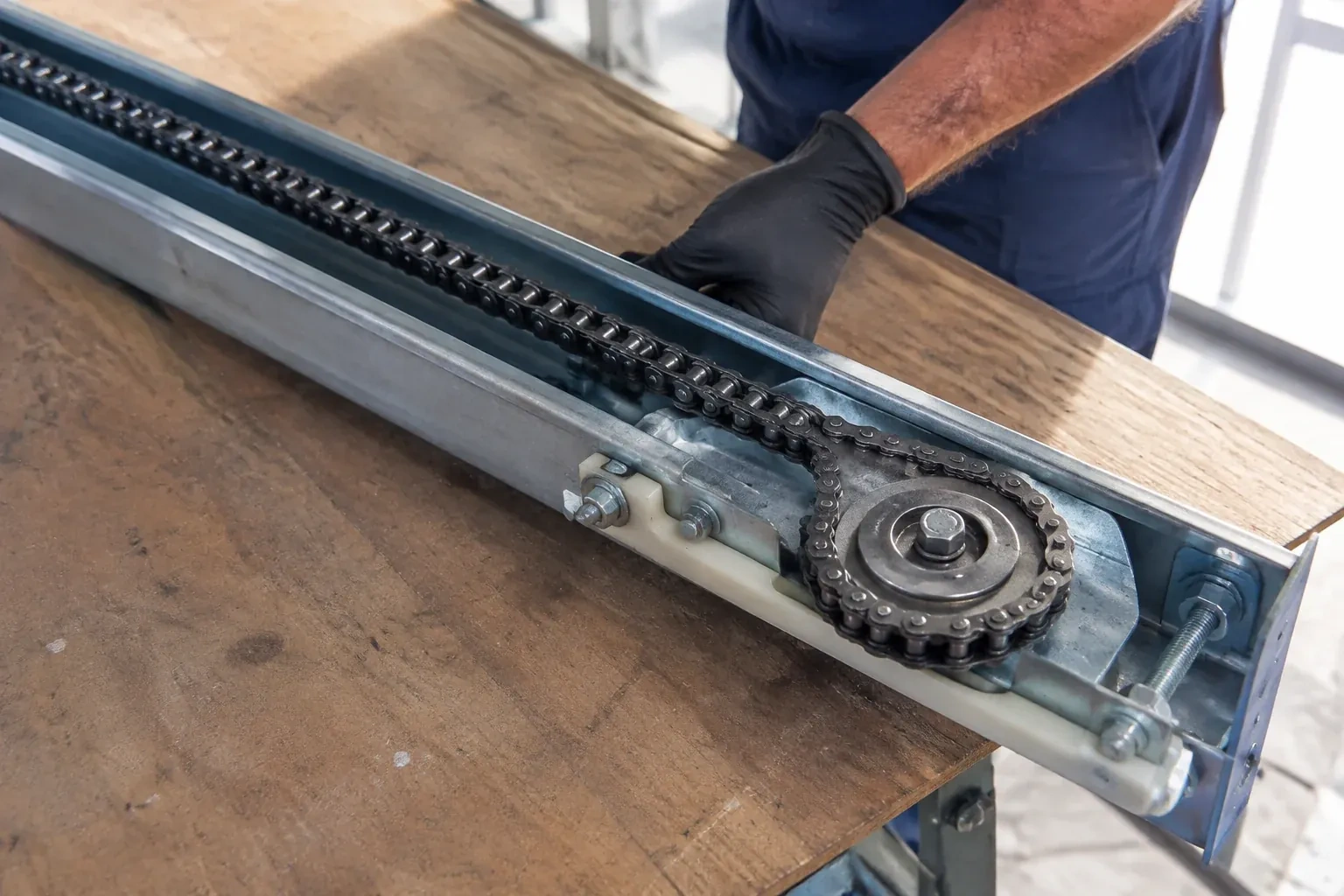 Book soonChain-Drive Opener RepairThe chain hangs in a loop under the rail and slaps against it on every cycle.
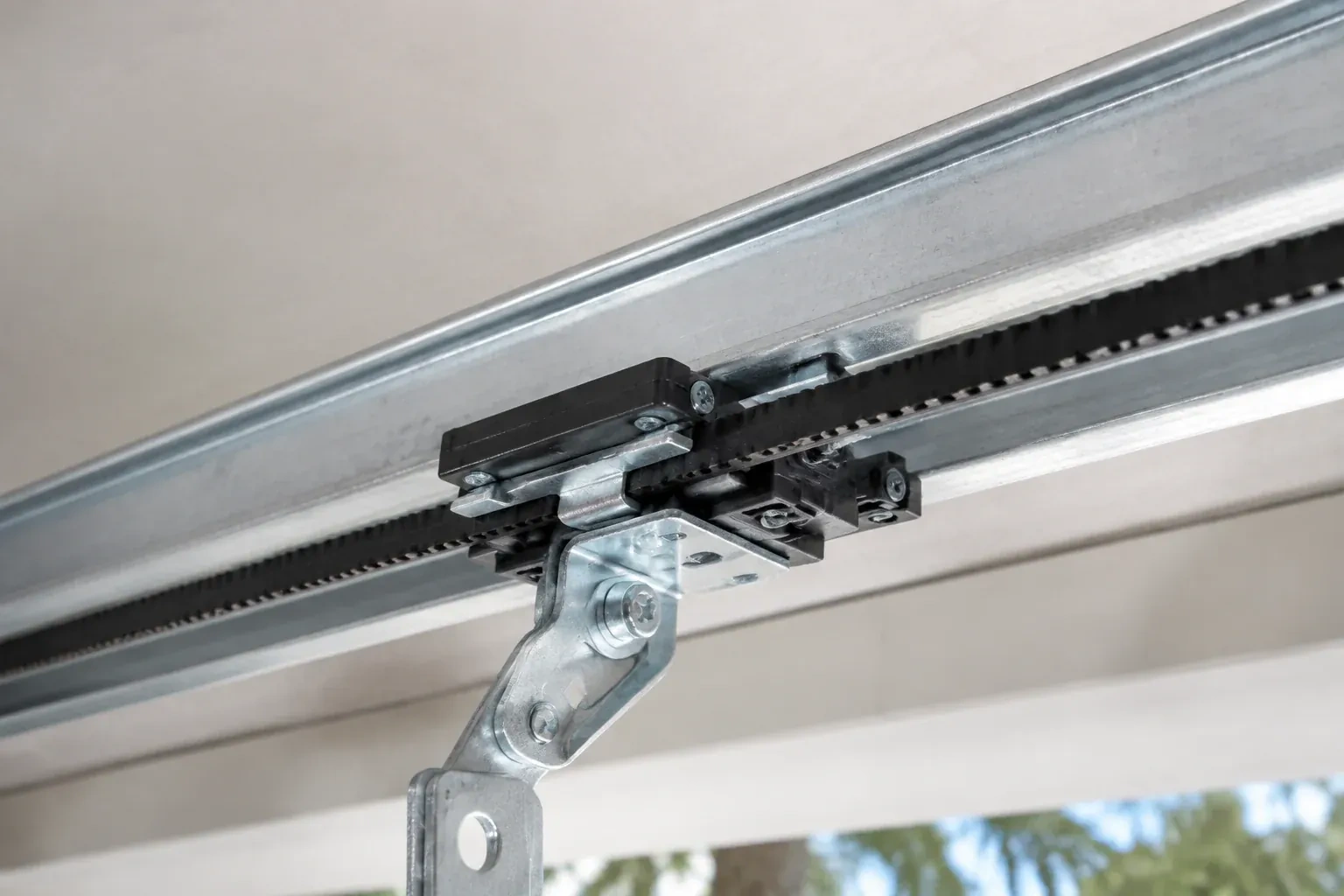 Book soonBelt-Drive Opener RepairIt is minus twenty in the detached garage and the door climbs in jerks, the belt stiff as a board.
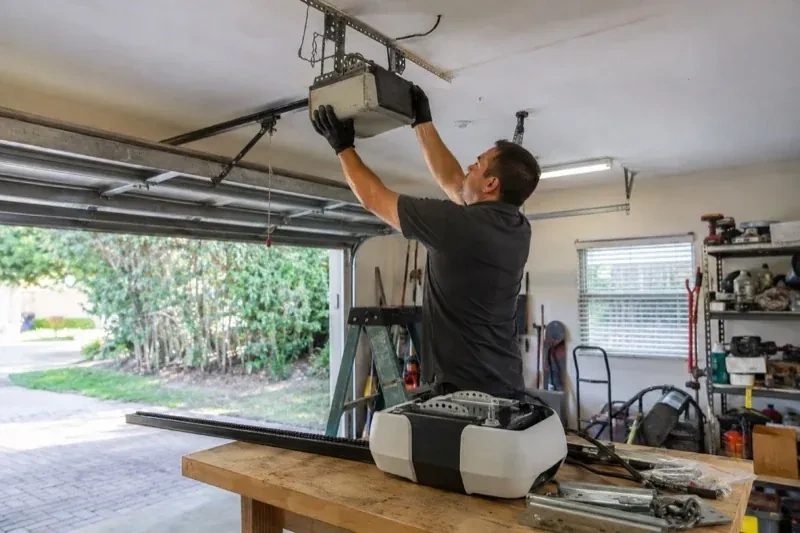 Plan aheadGarage Door Opener Replacement
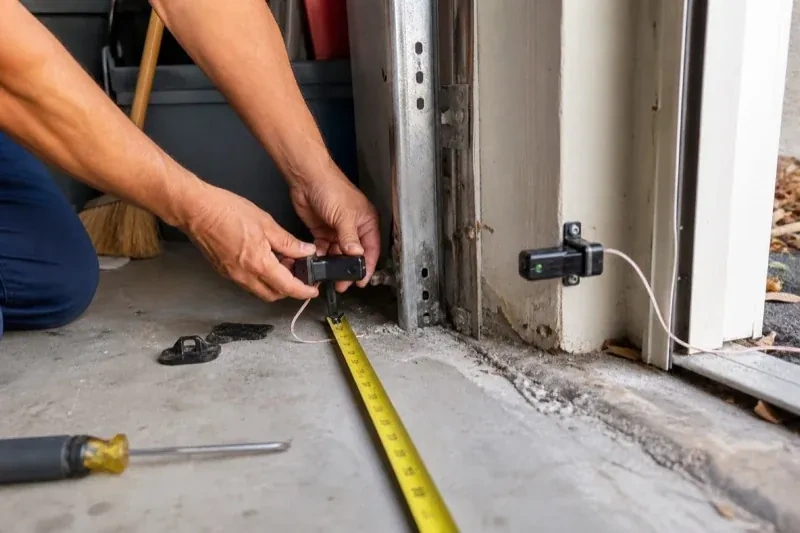 Book soonPhoto-Eye Sensor Alignment or ReplacementYou press the remote, the door drops a few centimetres, then climbs straight back to the top while the opener light blinks.
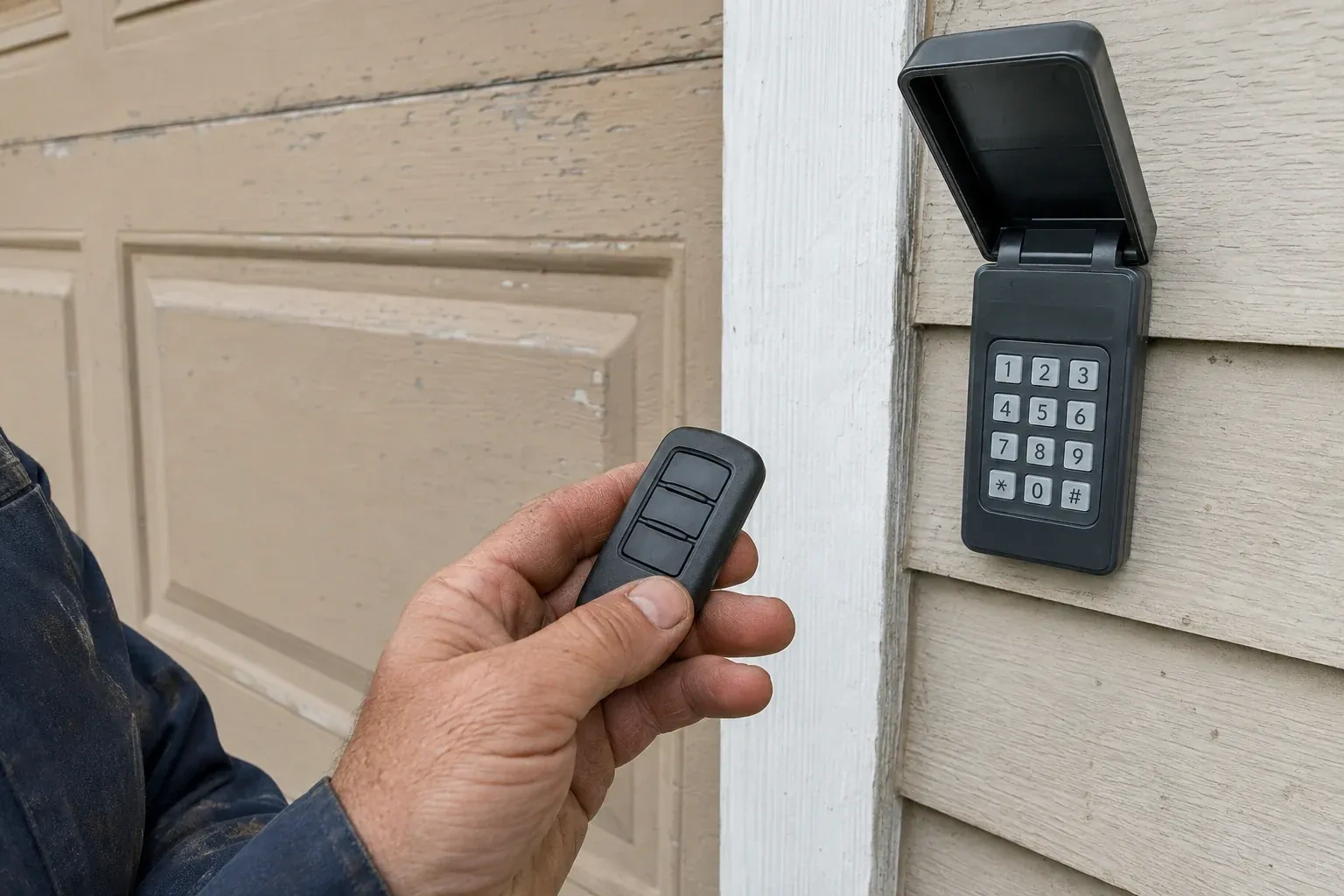 Plan aheadGarage Door Remote and Keypad Programming
Garage Door Opener Diagnosis and Repair near you
Simcoe, Ontario
Tiny information
- Town
- Tiny, Simcoe, Ontario
- In business
- 32 years
- Hours
- Open 24/7 · nights, weekends and holidays, same fees
- Phone
- (249) 499-8812
- Visits
- On-site assessment preferred. Request a visit or call.
What the census means at the door
47%
Homes of every age. About 47% of homes in Tiny were built in 1980 or earlier, according to the 2021 Census.
Streets with a mix of older and newer homes tend to show a mix of door styles too, from flush wood panels to raised-panel steel and carriage designs. When a replacement is chosen, it can either match the house's period or the neighbouring doors, and we help weigh both.
97%
Mostly houses. Single-detached houses make up about 97% of homes in Tiny (2021 Census).
Detached houses commonly have attached two-car garages with a wide double door, which is a heavy door on a pair of torsion springs. Spring and cable work on these doors is done as a matched set so the door lifts level and the opener carries only its intended load.
Nearby
Open 24/7
Request a visit
Nothing.
Call now · open 24/7(249) 499-8812- On-site assessment preferred
- Same fees day, night or weekend
- 32 years in business