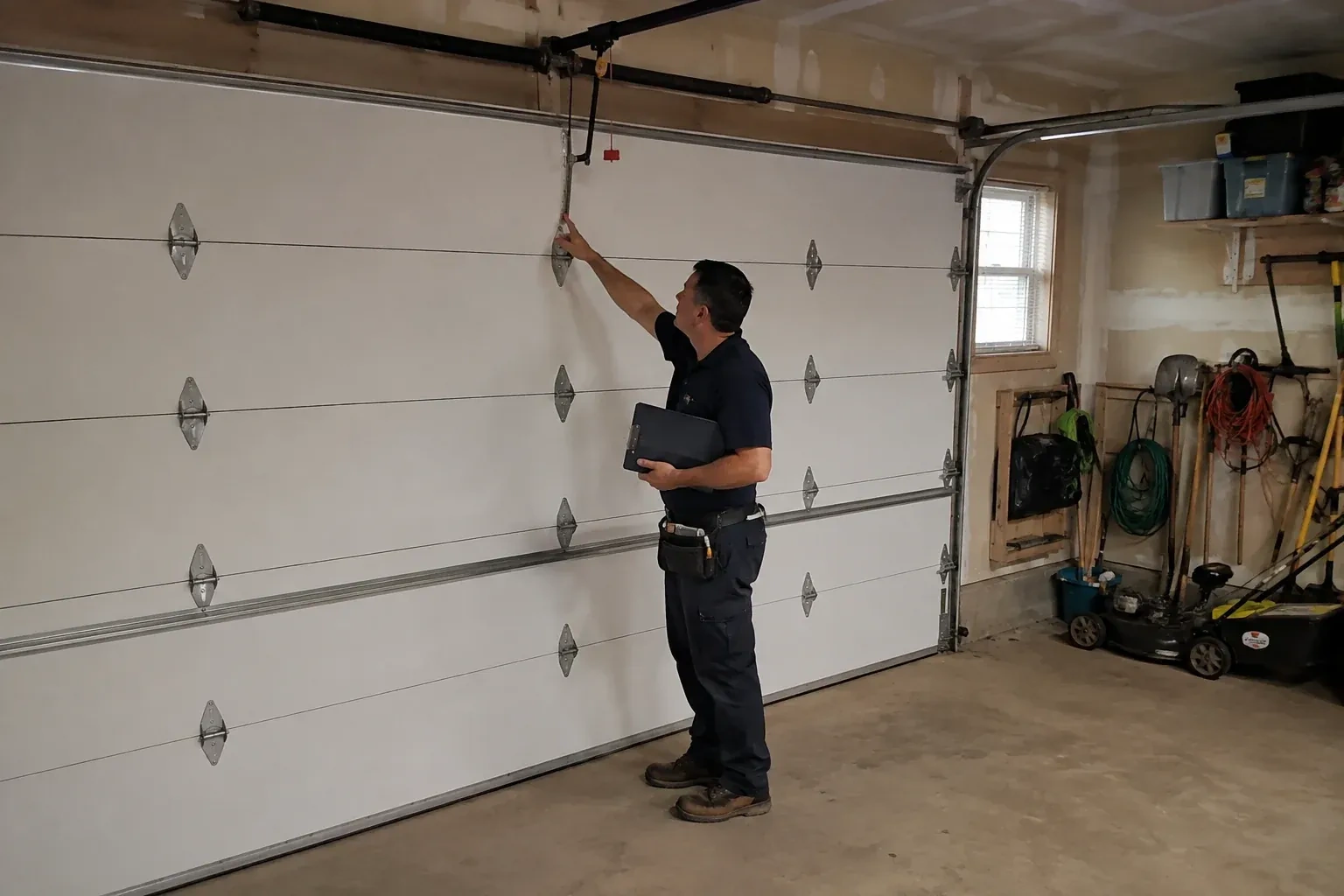
Plan ahead Repairs · Collingwood
Garage Door Tune-Up
The door lands with a thud you can feel through the kitchen floor, and sometimes it bounces back up a few centimetres before settling. The bottom section has a small dent where it keeps slamming the concrete.
Call now · open 24/7(249) 499-8812In plain words
Garage doors here live through a wide swing of seasons, and a tune-up before winter pays for itself in smooth mornings. Cold thickens tired lubricant and stiffens steel, so a door that ran fine in September can groan in January. Rubber seals go hard, meltwater freezes the bottom seal to the slab, and road salt works on the lower hardware. The fall visit replaces old lubricant with a low-temperature product, treats the seals with silicone and checks the threshold, since a door frozen to the slab should be freed and dried rather than forced by the opener.
How the visit goesOn windy nights the door rattles in its frame, there is a line of daylight along one side, and the bottom seal has gone hard and flat. Leaves and fine snow drift in underneath and the garage never seems to hold its temperature.
Garage Door Tune-Up · Collingwood
How the visit goes
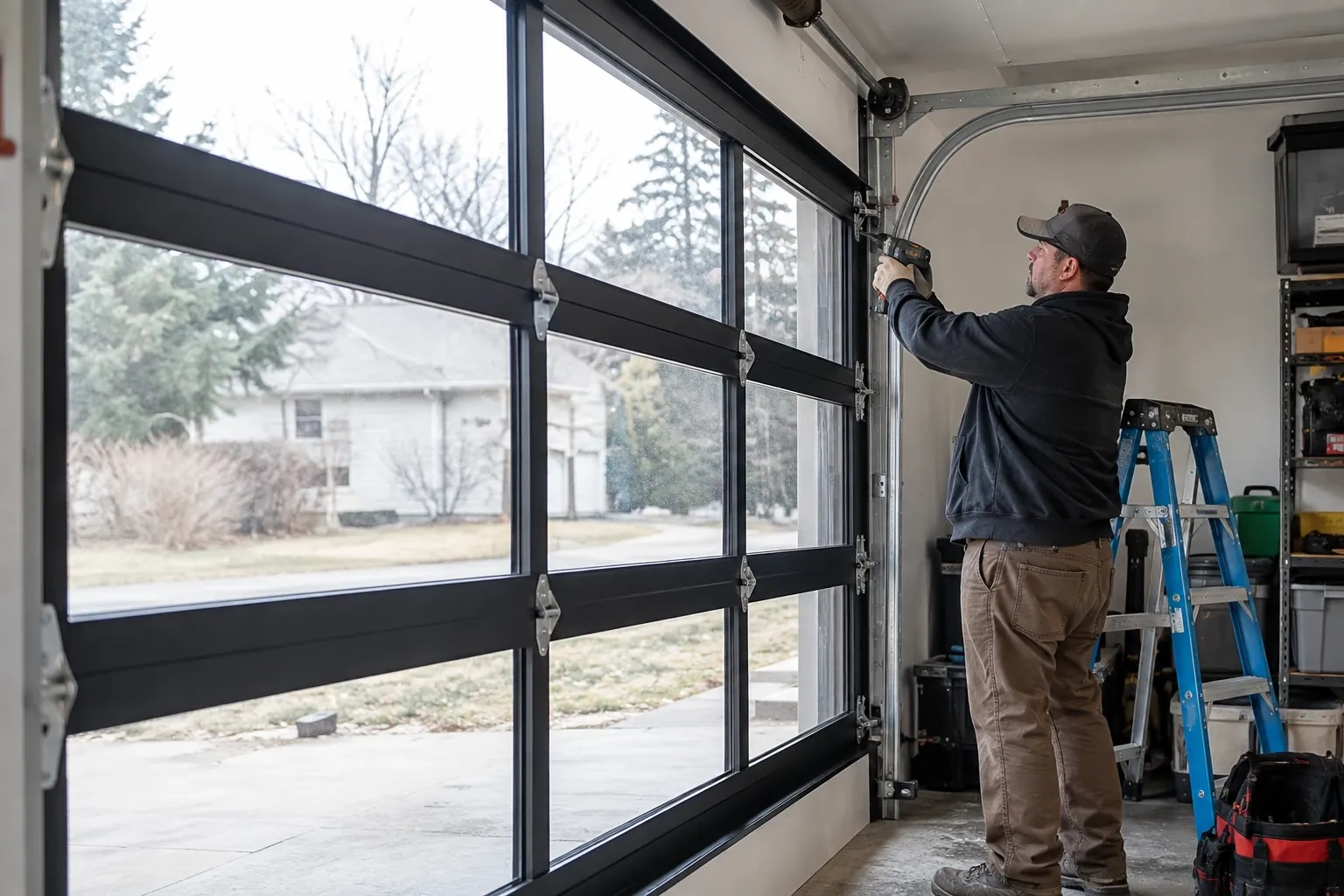
- 1
Seals, weatherstrip and the threshold
The bottom seal is checked along its whole length for tears, flattening and stiffness, and the threshold is looked at for the low spots where water pools and freezes. The jamb and header weatherstrip are pressed to see whether the rubber or vinyl still flexes or has gone hard, and the technician notes any daylight showing when the door is closed. Because the opener's travel limit decides how firmly the door presses onto its seal, the two are read together: a crushed seal often means the down limit is set too far, and a gap often means the door is stopping early. This part of the check matters most before winter.
- 2
Chain, belt, rail and trolley
On a chain-drive opener the technician sets the chain so it neither sags onto the rail nor pulls taut, following the maker's measurement at the midpoint, and lubricates the chain and rail only where that maker calls for it. A belt drive is checked for tension, cracking and fraying. The trolley is inspected for wear where it rides the rail, the release lever is worked to confirm it disengages and re-engages cleanly, and the door arm is checked for straightness and secure pins at both ends. Rail hangers are tightened so the whole assembly stops shaking when the door starts and stops. This quiets the ceiling and takes strain off the motor's drive gear.
- 3
Knowing what to listen for next
Part of the handover is a short lesson in the door's language, so the next change registers. A squeak returning means the hinge pins want lubricant. A new rattle at the top of travel means a screw is loosening and is worth a look. A door that starts to sink when lifted by hand is springs losing tension. A loud bang from the garage with the door then feeling very heavy is a broken spring, and the door stays closed until it is replaced. A door that reverses on its own with no obstruction is a sensor or force issue. With these signs in mind you can describe a problem precisely and decide whether it needs a call.
In the van
- Bottom seal (astragal)
- Silicone or lithium garage door lubricant
- Jamb and header weatherstrip
- Locking pliers or C-clamps
- 2x4 test block and tape measure
What affects the quote
- 1
Bottom seal and weatherstrip
Treating existing seals is part of the tune-up; replacing a torn bottom seal or renewing hardened jamb weatherstrip is additional material and time, quoted by the length involved.
- 2
Balance findings
If the balance test shows the springs have lost tension, spring adjustment or replacement is a separate job with its own quote rather than part of the maintenance visit.
- 3
Season and weather
A winter visit can include freeing a seal frozen to the slab and working with thickened lubricant before the tune-up proper can begin, which adds time to the visit.
Same fees day, night or weekend.
Garage Door Tune-Up: questions
What is the balance test and why does it matter so much?
With the door closed, the opener is disconnected using the red release handle and the door is lifted by hand. A balanced door rises with modest effort, stays fully open and holds still about a metre off the floor. The springs are meant to carry nearly all the weight so the opener only guides the door. A heavy or sinking door means the opener is lifting weight it was not built to lift, wearing its gear and making the reversal system less reliable.
Do you adjust the springs during a tune-up?
Springs are inspected and lubricated during a tune-up, and the balance test tells us whether they are carrying the door's weight properly. Changing their tension is a separate, deliberate job: the door is clamped to the track, winding bars are used on a torsion spring, and the technician works from a stable position. If the balance check shows the springs need adjustment or replacement, you receive that as its own recommendation with its own quote.
Should I lubricate the tracks?
No. Tracks should be clean and dry. Rollers are meant to roll along the track on their own bearings, and a film of lubricant on the track collects grit, thickens in the cold and makes the rollers slide and drag instead. Wipe the tracks with a rag and put the lubricant where it belongs: on the hinge pins, the roller bearings, the spring coils and the bearing plates at the ends of the torsion shaft.
Repair & Maintenance
Bigger photo, sooner job: Emergency Book soon Plan ahead
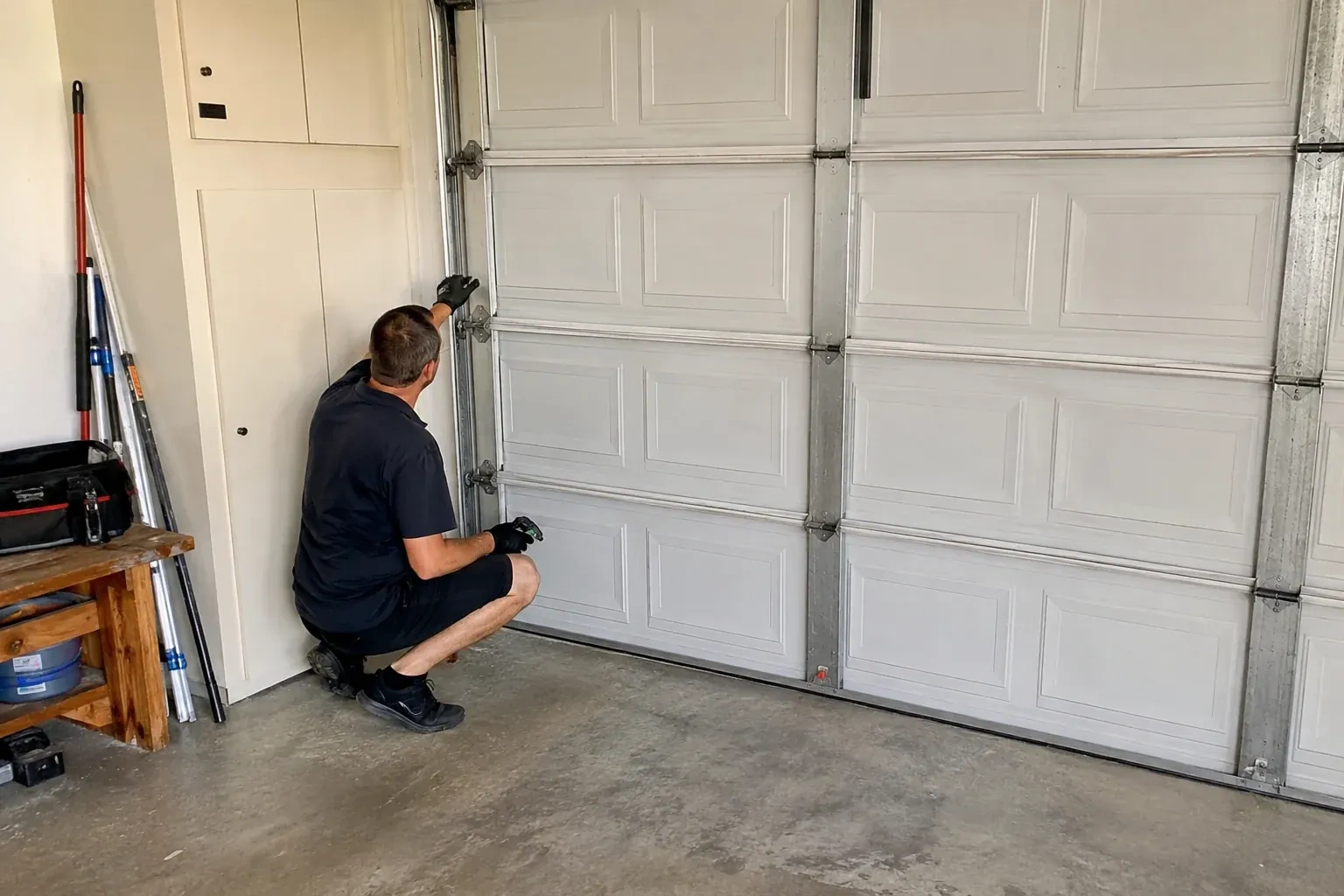 Plan aheadGarage Door Safety Inspection
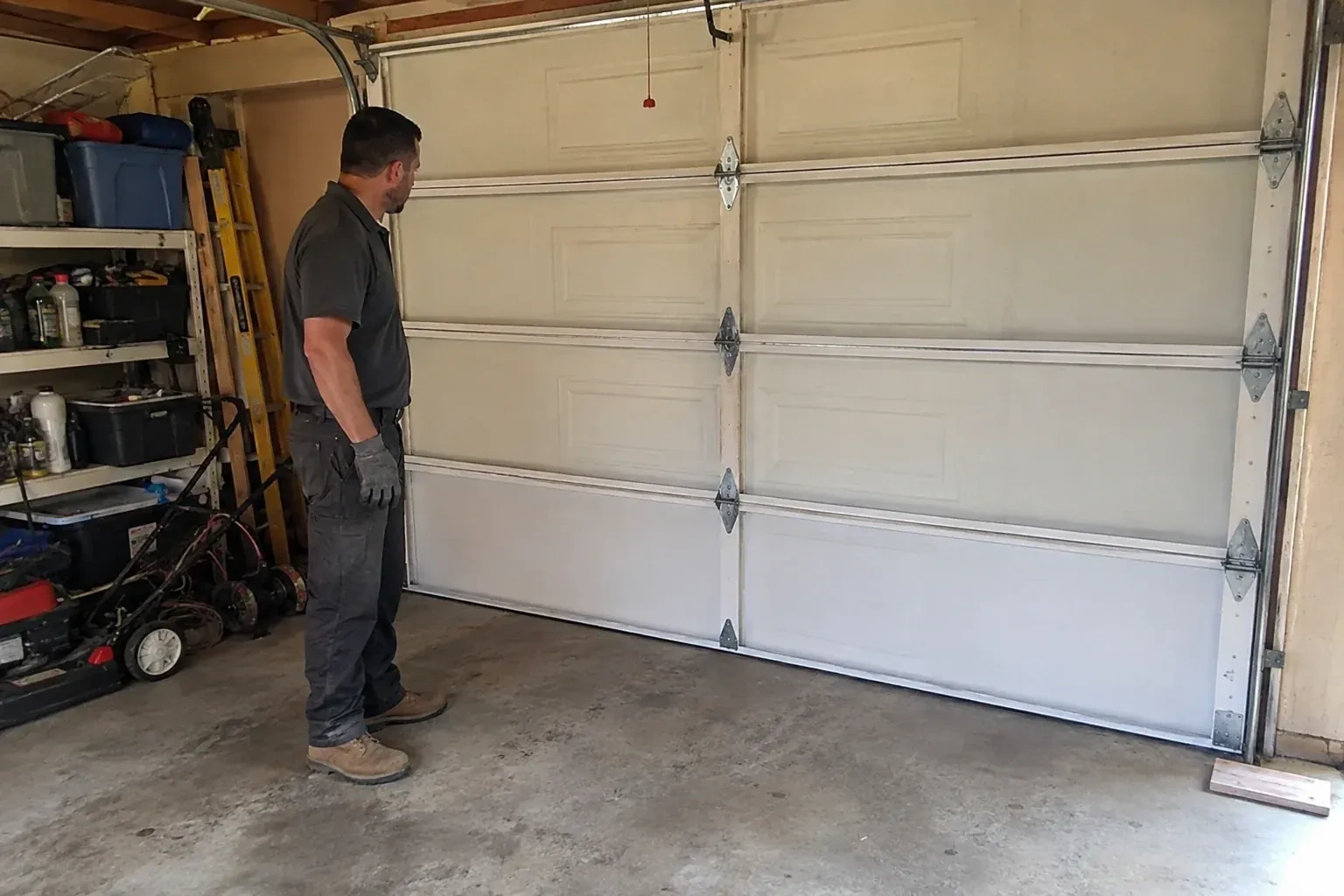
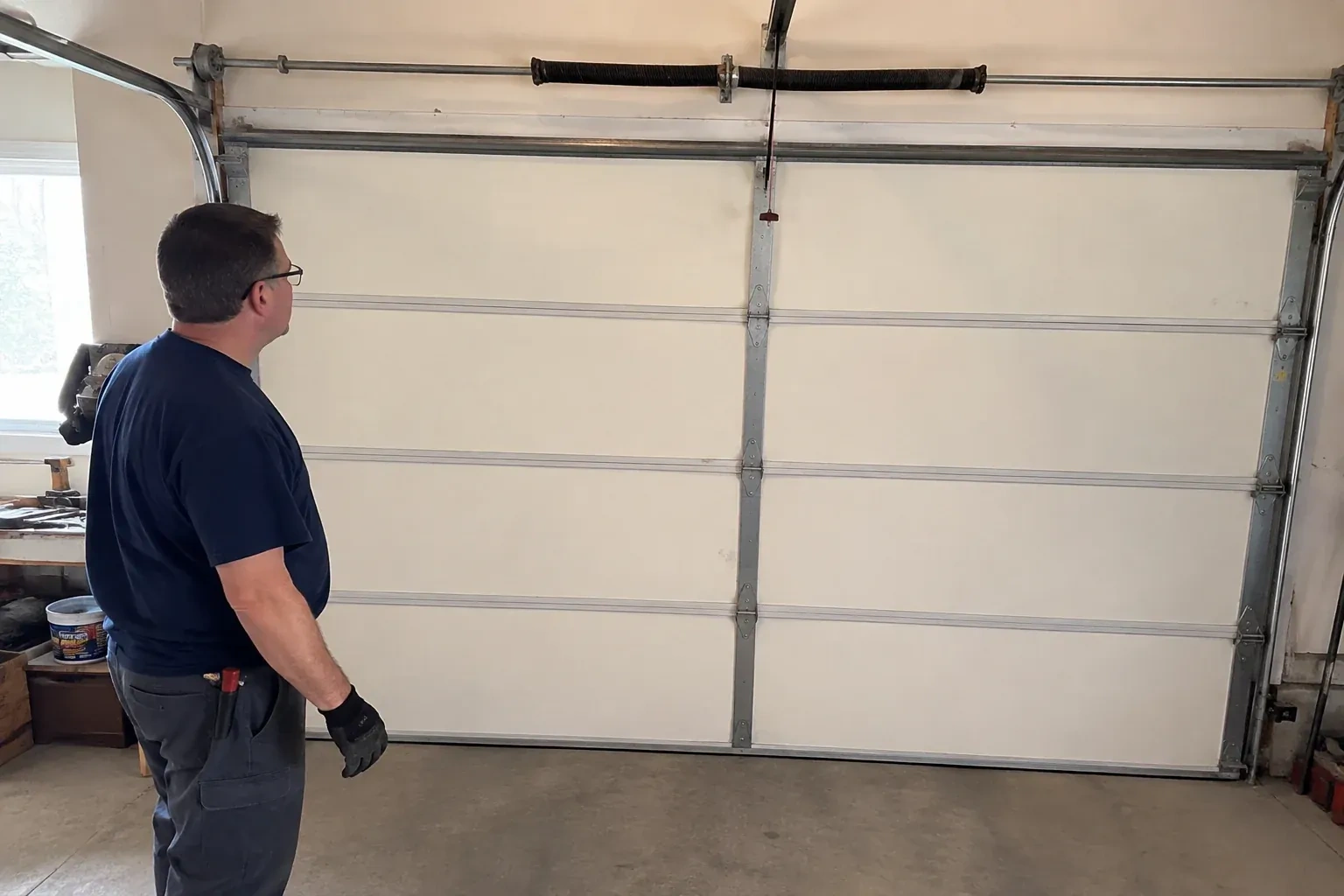 EmergencyOff-Track Garage Door ResetThe morning after a thaw the opener groaned, the door stayed stuck to the icy floor for a second, then lurched up crooked.
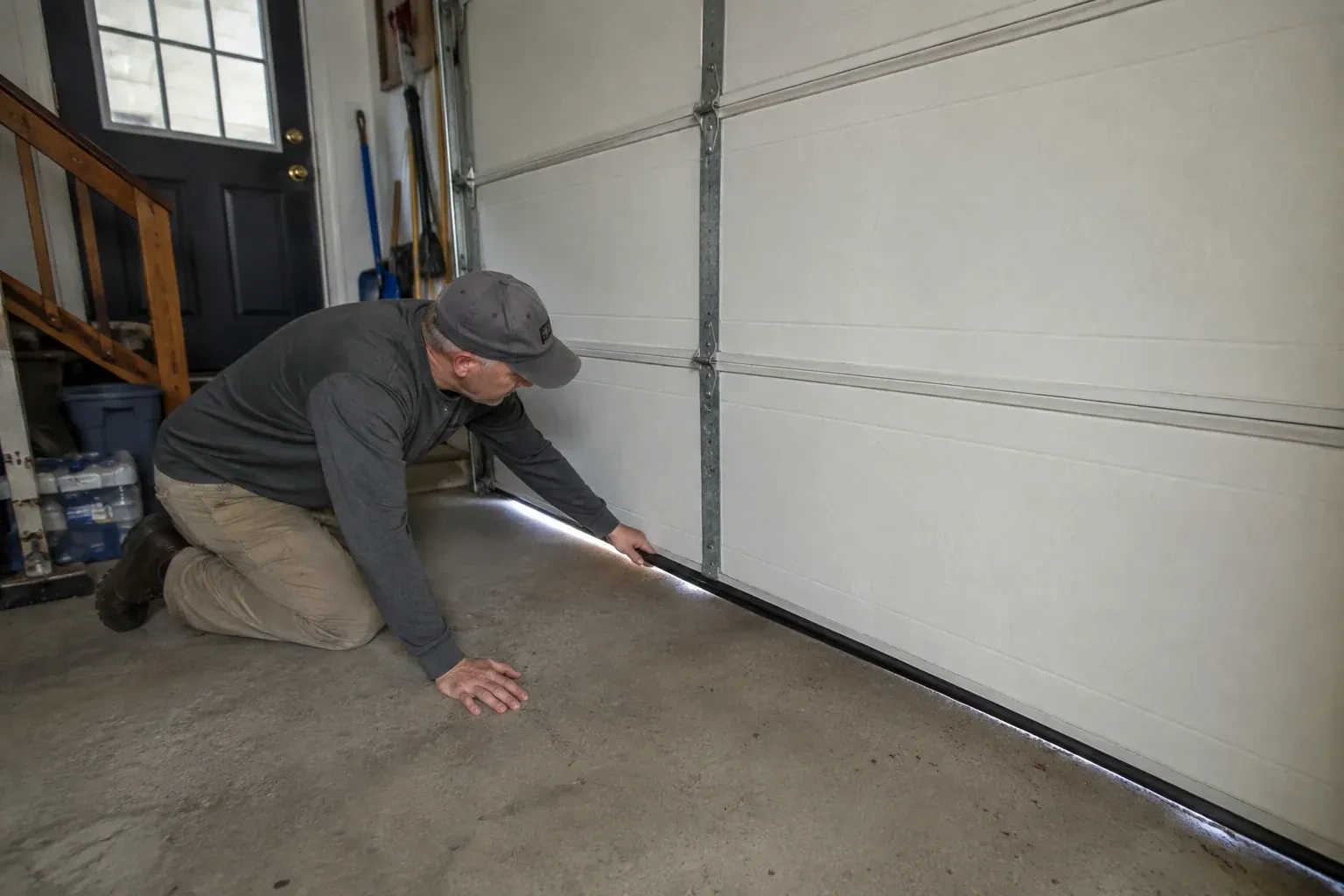
 Book soonGarage Door Panel ReplacementYears of slap shots have peppered the lower two sections with dents.
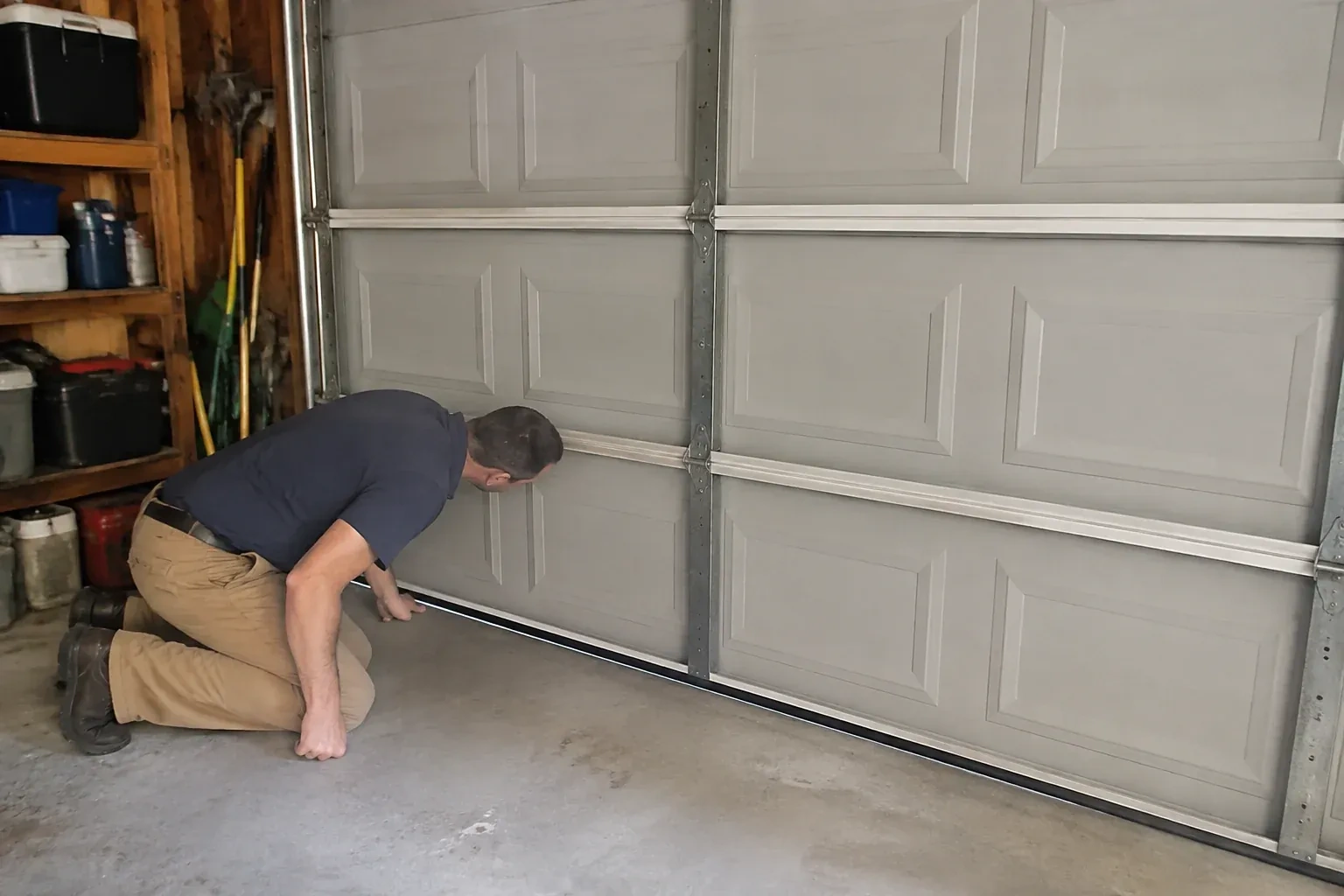
 Plan aheadGarage Door Bottom Seal Replacement
 Plan aheadGarage Door Perimeter Weatherstrip
Simcoe, Ontario
Collingwood information
- Town
- Collingwood, Simcoe, Ontario
- In business
- 32 years
- Hours
- Open 24/7 · nights, weekends and holidays, same fees
- Phone
- (249) 499-8812
- Visits
- On-site assessment preferred. Request a visit or call.
What the census means at the door
40%
Homes of every age. About 40% of homes in Collingwood were built in 1980 or earlier, according to the 2021 Census.
Where houses span several decades, weatherproofing needs vary: older garages with uneven aprons need thicker bottom seals, newer ones mainly need cracked seal sections replaced. The technician looks at how the door meets the floor and the jambs and fits the seal that actually closes the gap.
56%
A mix of homes. Single-detached houses make up about 56% of homes in Collingwood (2021 Census).
In areas mixing houses with townhouses and condos, a technician often works on several doors on one street, some owned outright and some looked after by management. Scheduling them together saves everyone time, and we are glad to plan a visit that covers the group.
Nearby
Open 24/7
Request a visit
The door lands with a thud you can feel through the kitchen floor, and sometimes it bounces back up a few centimetres before settling.
Call now · open 24/7(249) 499-8812- On-site assessment preferred
- Same fees day, night or weekend
- 32 years in business